
30 60 90 Day Sales Plans for Freelancers
You've probably had a promising lead sitting in a spreadsheet for weeks, buried beneath old project notes and half-finished formulas. A client asks for an invoice, you search through email to reconstruct the scope, then realize you forgot to send the follow-up that could have moved another opportunity forward. The work gets done, but the sales process feels improvised.
A 30-60-90 day sales plan gives that process a manageable rhythm. For a freelancer or small business serving fewer than 50 clients, it shouldn't resemble a corporate onboarding document. It should be a practical roadmap for organizing relationships, starting useful conversations, and improving the way you turn opportunities into paid work.
Table of Contents
- The Chaos of Solo Selling
- Phase One Building Your Foundation
- Phase Two Executing Your Outreach
- Phase Three Optimizing for Growth
- Tools That Fit Your Business
- Start Planning Your Success
The Chaos of Solo Selling
A typical solo sales process has no single home. Contacts sit in a spreadsheet, proposals live in cloud folders, appointments are scattered across calendars, and follow-ups depend on remembering who needs a reply. Meanwhile, invoicing often happens only after the client asks, which creates unnecessary pressure at the exact moment you should be focused on delivery.
Consider a freelance designer who speaks with a local retailer about a rebrand. She records the retailer's name in Google Sheets, writes the next step on a sticky note, and spends the afternoon on an existing project. A week later, she remembers the conversation but can't find the notes. The opportunity hasn't disappeared because the retailer rejected her. It has disappeared because the process gave her no reliable place to continue it.
That's where the framework helps. The traditional structure divides the first 90 days into three phases, learning, applying, and improving, as described in Zendesk's guide to 30-60-90 day sales plans. For a solo practitioner, those phases create enough structure to prevent neglected leads without forcing you into a rigid enterprise routine.
Practical rule: A sales plan should reduce decisions, not create another administrative project.
Your version might track prospective clients, current projects, repeat-work opportunities, invoices, and appointments in one view. It might also include a simple weekly review rather than formal manager meetings. The point isn't to imitate a large sales department. It's to make every lead visible, every next action clear, and every invoice easier to send.
Phase One Building Your Foundation
The first 30 days should make your business easier to understand from the inside. Don't begin by chasing an ambitious closing target. Start by creating a dependable record of who your clients are, what they need, and what should happen next.

Three useful goals for the first month
1. Build one contact list. Import current clients, former clients, warm introductions, and realistic prospects. Add useful context, such as service interest, last conversation, expected timing, and the person responsible for approving the work. A short, accurate database is more valuable than a large list you never maintain.
2. Define your basic pipeline. Use stages that match how you sell. A photographer might use New inquiry, Discovery call, Proposal sent, Booked, and Completed. A consultant might need Needs review, Qualified, Scope agreed, Contract sent, and Active client. Each stage should answer one question: what has happened, and what must happen next?
3. Record every interaction. Log emails, calls, proposals, meeting outcomes, and promised follow-ups. This gives you continuity when a prospect returns after several weeks, and it makes your own patterns easier to spot. If your onboarding process is inconsistent, this client onboarding process guide can help you define the handoffs between sales and delivery.
Keep the first month low-pressure, but not passive. Review your service descriptions, clarify who benefits most from each offer, and identify the questions prospects ask repeatedly. These observations become better proposals and more focused outreach later.
A useful first-month checkpoint is simple: every active contact has a stage, every opportunity has a next action, and every client record contains enough information to continue the conversation without searching through multiple apps.
You can also use the following video as a visual prompt while designing your own workflow:
Phase Two Executing Your Outreach
Days 31 to 60 are where your organized list becomes a working sales process. You're no longer collecting information for its own sake. You're contacting people, testing your message, and making sure each conversation has a clear next step.
Start with a repeatable weekly cadence. Set aside time for new outreach, follow-ups, proposal work, and pipeline maintenance. The exact schedule depends on your workload, but the categories should remain visible. Without protected time, client delivery will always push sales activity to the bottom of the day.
A pipeline that shows the work
A Kanban pipeline works well for a small operation because it turns an abstract list into a visual queue. Dragging a deal from Discovery call to Proposal sent should represent a real change in the relationship, not a hopeful assumption.
For each opportunity, capture:
- The latest interaction: Record what the prospect said, not just that you contacted them.
- The next commitment: Add the action you promised, such as sending a sample, answering a question, or confirming availability.
- The follow-up date: Choose a specific date instead of writing “follow up soon.”
- The commercial context: Note the service, scope, decision-maker, and any timing constraint.
A short email sequence can handle routine reminders, while personal messages should carry the important context. Learn more about designing an email sequence for structured follow-up, then keep the automation limited to messages that benefit from consistency.
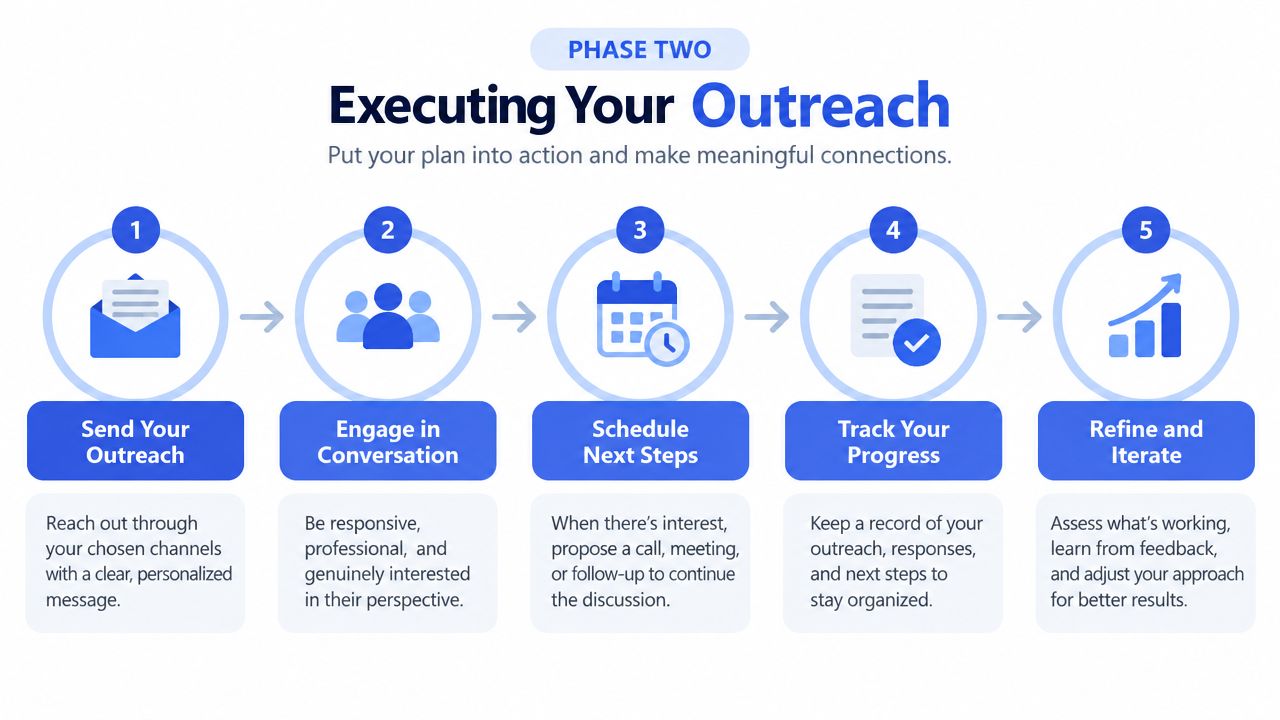
The best signal in this phase isn't raw activity. It's movement. Are prospects replying? Are discovery calls producing clear needs? Are proposals progressing, stalling, or revealing that your offer is difficult to understand?
A weekly review should answer three questions:
- Which opportunities moved forward?
- Which prospects need a human reply?
- Which message or offer produced the clearest response?
A quiet pipeline is often a process problem before it's a lead problem.
Don't automate every interaction. Generic reminders can keep a task technically complete while making the relationship feel neglected. Use automation for timing and consistency, then use your own judgment for the conversation.
Phase Three Optimizing for Growth
By days 61 to 90, the emphasis shifts from learning and execution to independent performance and refinement. The final phase of a 30-60-90 plan is commonly associated with closing early deals, improving the sales approach, and reviewing what should carry into the next plan, as outlined in Apollo's sales plan framework.
For a freelancer, optimization means finding the parts of the sales cycle that deserve more attention. Look at completed opportunities and ask where value was created or lost. You might find that referrals convert more naturally than cold outreach, that a certain service attracts better-fit clients, or that proposals stall because the next step isn't explicit.
Use leading indicators before revenue
Revenue matters, but it often arrives after the activity that creates it. Track the earlier signals that show whether your process is functioning:
- Time to first meeting: How quickly does a qualified inquiry reach a real conversation?
- Time to first opportunity: How long does it take for a contact to become a defined piece of work?
- Pipeline coverage: Do you have enough realistic opportunities to support your target?
- Follow-up completeness: Are promised replies and next actions being recorded?
- Conversion quality: Where do conversations stop, and what reason appears most often?
Industry benchmarks commonly use days 61 to 90 for a move toward 50% to 75% of quota, with pipeline often expected to reach 2 to 3 times quota by day 90, although the appropriate target depends on role, offer, and sales cycle. These benchmarks are summarized in this sales onboarding benchmark guide. For a solo business, translate quota into a realistic revenue or booked-work target rather than copying a corporate number.
Day 90 shouldn't be treated as a finish line. Average B2B sales ramp time reached 5.7 months in 2025, compared with 4.3 months in 2020, according to Gangly's sales onboarding statistics. Enterprise AEs may take 9 to 12 months to ramp, while SMB representatives may ramp in 1 to 3 months, so your own plan must reflect the complexity of your clients and buying process.
At the end of this phase, keep what works, remove steps that create friction, and write the next operating rhythm. A healthy system doesn't require you to remember every follow-up. It makes the next action obvious.
Tools That Fit Your Business
Your sales plan only works if you'll maintain it on a busy Tuesday. A complicated CRM can provide impressive dashboards, but setup time and feature overload often make a small business less organized, not more. The right tool should replace scattered spreadsheets without becoming another system to manage.
Match the tool to the workflow
For a freelancer or micro-business, start with the smallest useful set of functions:
- Contact management: Keep names, notes, tags, and interaction history together.
- Kanban pipeline: See which opportunities are new, active, waiting, or ready to close.
- Invoicing: Turn agreed work into a professional invoice without rebuilding client details.
- Email follow-ups: Schedule appropriate reminders so warm opportunities don't rely on memory.
- Appointment scheduling: Give prospects a clear way to book discovery calls.
- Simple reporting: Review revenue, deal status, and activity without constructing another spreadsheet.
Set up the system in this order. First, create your contacts and pipeline stages. Next, enter active opportunities and assign a next action to each. Then connect your invoice and calendar habits to the same client records. Finally, review the dashboard during your weekly planning session and correct incomplete records immediately.
The principle behind CRM software for freelancers is straightforward. You need enough structure to protect opportunities and cash flow, but not so much configuration that you spend your selling time managing software.
A free, no-code CRM environment can be a sensible starting point when your client base is modest. Test whether it helps you answer practical questions quickly: Who needs a reply? Which proposal is waiting? What work is booked? Which invoice still needs sending?
The useful tool is the one you open before the spreadsheet.
Avoid buying features for a future business you don't have yet. Begin with contact records, deal stages, follow-ups, appointments, and invoices. Add complexity only when a genuine bottleneck appears.

Start Planning Your Success
A 30-60-90 day sales plan gives solo selling a useful operating rhythm. The first phase creates clean records and clear stages. The second turns those records into consistent outreach and follow-up. The third examines what converted, where conversations stalled, and which parts of the process deserve refinement.
The framework is flexible enough for a freelancer, coach, designer, photographer, consultant, or small agency. It also prevents a common mistake, treating day 90 as the end of the journey. Your first plan should leave behind a repeatable weekly routine that continues to improve as you learn more about your clients.
You don't need a large sales department to manage relationships professionally. You need one dependable place to see the work, remember the commitments, and keep billing connected to delivery.
Micro CRM brings contacts, deals, invoices, follow-ups, and appointments into one lightweight workspace for freelancers and small businesses. Visit Micro CRM to organize your 30-60-90 day sales plan and start for free, with no credit card required.